

In the realm of mental health treatment, a striking fact has emerged: emergency room visits attributed to the use of prescription medication Sonata Zaleplon, a sedative-hypnotic specifically formulated for insomnia treatment, have seen a notable increase. As sleep disorders continue to impact a significant portion of the population, the balance between therapeutic benefits and potential risks of such drugs has become a subject of critical conversation among healthcare professionals and patients alike. Sonata Zaleplon is often prescribed to tackle the challenges of initiating sleep, but this has opened up a dialogue on its safety profile, dependence issues, and the implications for those seeking relief from sleep disturbances.
Key Takeaways
- Sonata Zaleplon is used for its efficacy in reducing sleep latency in patients with insomnia.
- Recognizing the sharp uptick in ER visits related to Sonata, there is a growing call for cautious use of this medication.
- Due to its pharmacological profile, Sonata selectively targets GABA(A) receptors, which could offer benefits over other hypnotics.
- While Sonata tends to not significantly disrupt REM sleep, its risk of cognitive side effects and potential for abuse remains a concern.
- Understanding the balance of risks and benefits is crucial for clinicians when prescribing Sonata as part of a comprehensive sleep disorder strategy.
Overview of Sonata Zaleplon in Insomnia Treatment
In the quest to manage short-term insomnia, many patients have turned to Sonata Zaleplon, a sleeping pill known for its efficacy in hastening the onset of sleep without disrupting the structural integrity of the sleep pattern. Recognized for its rapid-onset and brief half-life, Sonata Zaleplon caters to those who need to induce sleep quickly and efficiently, with a notable absence of next-day drowsiness.
One of the standout attributes of Sonata Zaleplon in the realm of sleep aids is its ability to aid sleep initiation without an overhaul of the sleep stages that are crucial for cognitive and physical rejuvenation. The intricate design of Sonata’s pharmacological profile prioritizes the preservation of natural sleep architecture, allowing users to awaken without the grogginess commonly associated with other hypnotic medications.
The following table delineates the key aspects of Sonata’s application in treating short-term insomnia:
| Property | Description |
|---|---|
| Therapeutic Use | Aimed at individuals struggling with difficulty initiating sleep |
| Rapid Onset of Action | Facilitates quick transition to sleep, reducing the latency period |
| Half-Life | Short half-life minimizes risk of next-day residual drowsiness |
| Sleep Architecture Maintenance | Does not significantly alter proportions of sleep stages |
| User Experience | Lowers incidence of grogginess, contributing to a more natural awakening |
Essentially, when choosing a treatment for short-term insomnia, Sonata Zaleplon manifests as a premier choice for patients in need of undisturbed sleep and alertness during waking hours. Its bridging of effectiveness and safety makes Sonata Zaleplon a distinctive agent in insomnia pharmacotherapy.
Understanding Sonata's Pharmacodynamics and Mechanism of Action
In the treatment of insomnia, particularly for those who find it difficult to drift off to sleep, Sonata Zaleplon has emerged as a significant prescription sleep aid. Understanding how this medication sustains its efficacy hinges upon an in-depth look at its pharmacodynamics and the mechanism by which it influences the onset of sleep.
Shortening Sleep Onset
Among its peers in the pharmacological landscape of sedative-hypnotics, Sonata Zaleplon is renowned for its capacity to expedite the transition from wakefulness to sleep. This rapid-onset sleep facilitator is particularly adept at shortening sleep onset for patients, which is central to its therapeutic appeal. Unlike other remedies that may offer a multifaceted approach to managing sleep disorders, Sonata’s forte lies predominantly in aiding swift sleep initiation.
GABA(A) Receptor Interaction
At the heart of Sonata’s functionality is its interaction with the GABA(A) receptors in the brain. By fostering a surge in the inhibitory neurotransmitter GABA, the nonbenzodiazepine nature of Sonata Zaleplon ensures that these receptors are modulated in such a way that leads to a calming, sedative effect without the drawbacks commonly seen in other sleep aids.
Comparative Effects with Other Hypnotics
Contrasting Sonata Zaleplon with alternative hypnotics sheds light on its distinct profile. Where many such agents indiscriminately bind to various GABA(A) receptor subtypes, Sonata’s selective action limits its impact on sleep stages, such as REM sleep. This selectivity is not just a theoretical nuance; it has tangible implications for the user experience, reflecting a reduced risk for carryover sedation and a potential safeguard against tolerance that could warrant escalating dosages.
Contrary to the broad-spectrum sedation seen with hypnotics of a bygone era, the modern therapeutic ethos prioritizes precision; and in that regard, Sonata Zaleplon is a testament to advancing pharmaceutical innovationâa fitting choice for those seeking aid in the elusive quest for rapid-onset sleep.
The Role of Sonata Zaleplon in Short-Term Insomnia
When it comes to short-term insomnia, a common concern among patients is the struggle to fall asleep. Sonata Zaleplon has emerged as a preferred prescription medication due to its efficacy in addressing this specific issue. As it is approved for transient episodes of insomnia, its role in the realm of insomnia treatment is significant.
According to various studies, Sonata is beneficial for reducing the time it takes to fall asleep, and it manages to do so without disrupting the sleep cycle. This aspect is particularly important for those who need to ensure they have a restful sleep but cannot afford to suffer from grogginess the following day. Let’s take a closer look at how Sonata Zaleplon stacks up in treating short-term insomnia:
| Feature | Benefit | Consideration |
|---|---|---|
| Quick Onset of Action | Reduces the time to fall asleep promptly | Useful for sleep-onset insomnia |
| Short Half-Life | Minimizes risk of next-day drowsiness | Advantageous for those with daytime responsibilities |
| Lack of Sleep Architecture Alteration | Maintains integrity of sleep stages | Preserves natural sleep pattern |
| Short-Term Use Emphasis | Decreases potential for tolerance and dependence | Generally recommended use is up to two weeks |
The clinical focus on short-term use is a critical element of treatment with Sonata Zaleplon, underscoring the importance of preventing tolerance and mitigating the risk of dependence that is frequently associated with sedative-hypnotics. As such, Sonata serves as a targeted intervention for those experiencing a temporary disruption in their sleep patterns, filling a niche in the comprehensive care of sleep disorders.
Evaluating the Efficiency and Tolerability of Sonata
The therapeutic landscape for treating sleep disorders has evolved with drugs like Sonata Zaleplon, a sedative-hypnotic prescribed for insomnia. Navigating through its efficacy and tolerability is vital to grasp its impact on patients’ quality of life. Clinical studies have shone a light on Sonata’s ability to improve sleep quality by addressing specific sleep initiation issues.

Case Studies on Efficacy
Case studies offer concrete insights into Sonata Zaleplon’s impact across diverse demographics, namely its reduction in sleep latency. These studies enhance our understanding by not only affirming Sonata’s role in treating sleep disorders but also by establishing its value for improving patients’ overall sleep quality.
Side Effects Profile
While Sonata Zaleplon is recognized for its therapeutic benefits, clinicians must weigh these against the potential side effects. Concerns range from mild symptoms to more severe parasomnias, which involve complex behaviors like sleep-driving. Such risks necessitate a strong emphasis on patient education.
Impact on Quality of Life
Improvements in sleep onset attributed to Sonata Zaleplon contribute to a heightened quality of life, fostering better daytime performance and satisfaction. Ensuring these benefits are attained without compromising safety involves a careful, responsible approach to prescribing this sedative-hypnotic.
| Aspect | Clinical Findings | Patient Considerations |
|---|---|---|
| Efficacy | Significantly reduces sleep latency | Individuals with sleep onset issues |
| Side Effects | Headache, dizziness, complex behaviors | Education on risks, monitoring responses |
| Quality of Life | Potential for improved daily functioning | Assess overall life satisfaction |
Sonata and Sleep Quality: What Research Suggests
When it comes to improving sleep quality, Sonata Zaleplon has emerged as a significant prescription option for those grappling with sleep disorders. Varied studies have explored its efficacy, measuring its impact on the sleep cycle and overall restfulness experienced by users. Notably, reduced sleep latency and a decline in nocturnal awakenings are two of the critical benefits highlighted in research involving polysomnographyâa tool that captures comprehensive sleep data.
Moreover, short-term use of Sonata has been associated with minimal residual effects, meaning patients can wake up without the oft-dreaded “hangover” effect, which can severely impair daytime activities. Nonetheless, despite the satisfied sighs from countless patients finding solace in Sonata’s embrace at night, the medical community exercises caution. The importance of further research is underscored, particularly on the long-term safety profile of the drug.
| Aspect of Sleep | Impact of Sonata Zaleplon | Notes |
|---|---|---|
| Sleep Onset | Reduces time to fall asleep | Particularly effective for initial insomnia |
| Nocturnal Awakenings | Limits awakenings during the night | Contributes to uninterrupted sleep |
| Next-Day Hangover Effect | Minimal to no hangover effect | Enables normal functioning during the day |
| Longitudinal Efficacy | Current research indicates short-term effectiveness | Long-term effects yet to be thoroughly studied |
These findings formulate a compelling case for Sonata’s role in the management of sleep initiation problems. However, medical professionals continue to instill the necessity for controlled administration and in-depth studies to fully endorse Sonata’s enduring safety and efficacy.
Potential Risks and Side Effects of Sonata Zaleplon
When considering Sonata Zaleplon as a prescription sleep aid, it’s important to understand not only its benefits but also the possible risks associated with its use. Recognizing these risks is essential for healthcare providers and patients alike to ensure safe usage of this sedative-hypnotic medication.
Common Adverse Reactions
Common side effects of Sonata Zaleplon may impact a user’s day-to-day life and include issues such as headache, dizziness, and a general sense of drowsiness. Some patients might also experience side effects such as dry mouth, myalgia (muscle pain), and visual disturbances which may vary in intensity from person to person. These reactions are important to note because they can affect activities that require focus, such as driving or operating machinery.
Serious Health Concerns
Serious health risks linked to Sonata Zaleplon are particularly worrying when the drug is not taken as prescribed, or when mixed with alcohol or other central nervous system depressants. Memory impairments and impaired psychomotor functions may increase the risk of accidents, manifesting as a serious safety concern for users. Reports of complex sleep behaviors such as sleepwalking have underlined the need for considerable caution due to potential injuries or other dangers occurring during such episodes.
Addiction and Withdrawal Symptoms
Although it’s an effective solution for sleep onset difficulties, the potential of addiction remains an issue with Sonata Zaleplon, as it is a Schedule IV controlled substance. Prolonged use can lead to tolerance, and if the medication is discontinued abruptly, individuals may face withdrawal symptoms that can be distressing. Symptoms may include a rebound of insomnia, heightened anxiety, tremors, or abdominal and muscle cramps. Awareness and proper management strategies are key in mitigating these risks, ensuring that patients can safely transition off Sonata Zaleplon when necessary.
Non-Pharmacological Alternatives to Sonata
The quest for a peaceful night’s sleep doesn’t necessarily end with prescription medications like Sonata. In fact, numerous non-pharmacological treatments can be equally effective in managing insomnia. These alternative sleep aids not only help rectify the sleep-wake cycle but do so by mitigating the underlying behavioral and psychological aspects of sleep disorders. One of the standout approaches in this realm is Cognitive Behavioral Therapy for insomnia (CBT-I), which offers a structured program aimed at replacing sleep-inhibitive habits with ones conducive to sound sleep.
| Treatment Approach | Description | Benefits |
|---|---|---|
| Stimulus Control Therapy | Limits the bed to sleep-only activities to strengthen the bed-sleep association. | Helps create a strong psychological connection between sleep and the sleeping environment. |
| Sleep Restriction | Reduces time in bed to the actual sleep time hence increasing sleep efficiency. | Combats prolonged wakefulness and improves sleep quality over time. |
| Relaxation Techniques | Practices such as meditation, deep-breathing exercises, and progressive muscle relaxation. | Alleviates anxiety and promotes a calm state conducive to initiating sleep. |
| Cognitive Behavioral Therapy (CBT-I) | A multi-component treatment typically conducted by a trained therapist, addressing cognitive and behavioral factors. | Directly confronts the beliefs and attitudes that hinder sleep, promoting long-term sleep health. |
CBT-I, in particular, underscores the importance of addressing thoughts and beliefs that contribute to sleep anxiety and disruption. By ensuring tailored treatments for insomnia sufferers, such methods not only present a safe alternative to Sonata and other sedative-hypnotic medications but are also more sustainable in the long term with no risk of dependency or side effects.
Those interested in exploring these non-pharmacological avenues will find a multitude of resources and trained professionals ready to assist in the journey to improved sleep hygiene and well-being.
Examining Sonata's Impact on Elderly Patients with Insomnia
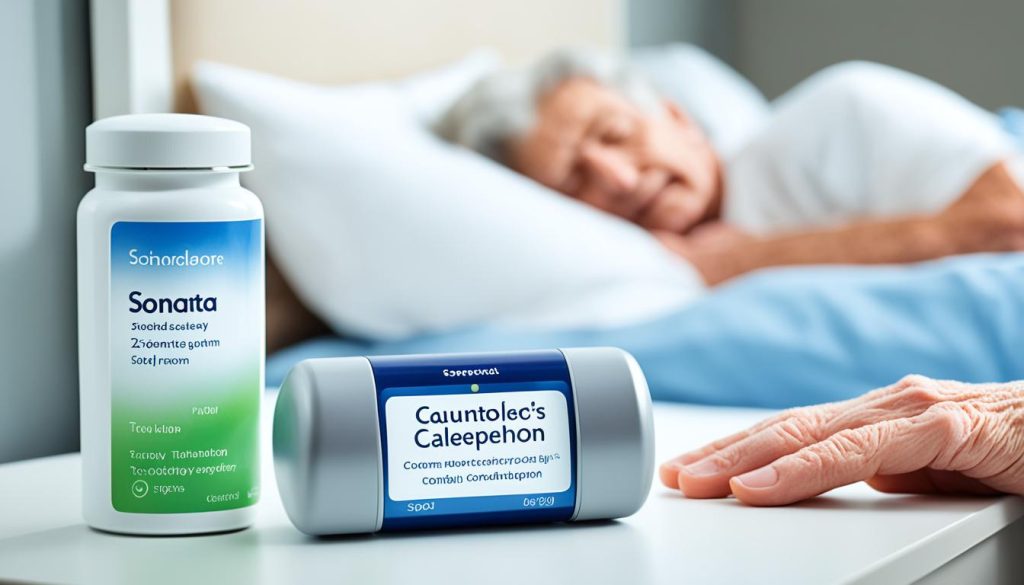
When considering prescription sleep aid precautions, particularly for elderly patients, the impact of Sonata Zaleplon garners significant attention. This demographic often requires a careful calibration of age-specific dosage to offset the heightened risk of elderly side effects.
Age-Specific Dosage and Efficacy
The metabolic changes that accompany aging necessitate a revision of standard dosing practices for sleep aids. Recognizing this, healthcare professionals generally recommend a lower dose of Sonata for older individuals. This approach to age-specific dosage helps maintain the balance between the drugâs hypnotic efficacy and the mitigation of elderly side effects.
Elderly-Specific Side Effects and Precautions
Elderly patients often exhibit a pronounced susceptibility to side effects when using prescription sleep aids such as Sonata Zaleplon. Cognitive impairment and an increased risk of falls are particularly concerning due to the associated morbidity. As a result, prescription sleep aid precautions must be meticulously followed to ensure patient safety and well-being.
| Consideration | Impact on Elderly | Recommended Precaution |
|---|---|---|
| Protection of cognitive function | Potential for impairment, leading to confusion and disorientation | Monitor cognitive status regularly |
| Minimization of falls | Increased risk due to psychomotor effects | Assess mobility, provide assistive devices if needed |
| Reduction of drug accumulation | Higher susceptibility to accumulation and toxicity | Adjust dosage and frequency to the lowest effective amount |
Tailoring therapeutic approaches for insomnia in the elderly, therefore, not only revolves around efficacy but also pivots on enhanced vigilance and a deeper understanding of the unique challenges faced by this sensitive population.
Sonata Zaleplon: Perspectives from Healthcare Professionals
Within the realm of insomnia treatment, healthcare professionals have voiced that the utilization of Sonata Zaleplon requires a tailored approach to each patient. They argue that this strategy not only enhances efficacy but also mitigates potential risks. In gathering Sonata Zaleplon insights, experts in sleep medicine emphasize a unified protocol in patient education, ensuring individuals are fully aware of both benefits and limitations inherent in this treatment.
Recognizing the heterogeneity of sleep disorders, healthcare providers champion the practice of crafting treatment perspectives that integrate a full spectrum of the patient’s health. This includes a thorough evaluation of their medical history, concurrent medications, and specific sleep disorder characteristics.
For every patient considering Sonata Zaleplon, a comprehensive risk-benefit analysis is paramount. We strive for optimal therapeutic outcomes, which necessitate vigilant monitoring for any signs of misuse or adverse reactions. Patient safety and sleep health are always at the forefront of insomnia management.
Monitoring and Adjusting Treatment: Regular follow-ups are crucial to ensure that the treatment remains effective and safe in the long run. Adjustments to the dosage or treatment plan are made based on individual response and the emergence of any side effects.
- Patient Education on Sleep Hygiene
- Strategies for Minimizing Potential Side Effects
- Identification of Non-Pharmacological Interventions
- Assessment of Long-term Treatment Viability
The consensus among healthcare professionals is that while Sonata Zaleplon can be a valuable component in the management of short-term insomnia, a comprehensive, patient-centric approach is pivotal. The enduring goal is to improve sleep health while simultaneously maintaining safety and mitigating the potential for dependence or abuse.
Conclusion
The intricate balance of risks and benefits is a crucial consideration when evaluating the use of Sonata Zaleplon in treating insomnia within mental health frameworks. As a tool offering immediate relief for patients grappling with sleep initiation disturbances, Sonata has earned its place in the arsenal of sleep therapy options. However, the responsibility on healthcare providers to remain vigilant about potential side effects and the risk of abuse is paramount. As such, the focus on mental health treatment outcomes must remain central to discussions on Sonata’s role in therapy.
Current research into sleep disorders and the administration of Sonata Zaleplon highlight the ever-evolving understanding of pharmacological intervention within mental health. The significance of sleep therapy insights is becoming increasingly apparent, as they contribute to the personalization and efficacy of treatment regimens. With the continuous emergence of alternative therapies and growing knowledge, the position of Sonata in treating sleep disorders is being meticulously scrutinized and refined.
A comprehensive approach to managing insomniaâa condition with profound implications for overall well-beingâis essential. This approach extends beyond pharmacology, encompassing behavioral strategies and lifestyle modifications to ensure long-lasting, favorable mental health outcomes. As the landscape of insomnia treatment advances, Sonata Zaleplon maintains its relevance, albeit within a framework of informed, cautious, and judicious application.
FAQ
What is Sonata Zaleplon used for in mental health treatment?
Sonata Zaleplon is prescribed as a sedative-hypnotic medication in mental health treatment to manage short-term insomnia, especially for patients who have difficulty initiating sleep.
How does Sonata Zaleplon compare to other sleeping pills?
Sonata Zaleplon is a short-acting sleeping pill that is often preferred for its rapid-onset and minimal impact on sleep architecture, including REM sleep, compared to some other sleeping pills which may have longer durations of action or alter various stages of sleep.
What is the mechanism of action of Sonata Zaleplon?
Sonata Zaleplon works by selectively targeting and modulating GABA(A) receptor subtypes in the brain, which enhances the inhibitory processes that help initiate sleep, effectively reducing sleep latency.
Is Sonata Zaleplon only recommended for short-term insomnia?
Yes, Sonata Zaleplon is specifically approved for the short-term treatment of insomnia characterized by difficulties with sleep initiation. Its use is usually recommended for periods not exceeding two weeks to avoid the development of tolerance or dependence.
How effective is Sonata Zaleplon, according to clinical studies?
Clinical studies have shown that Sonata Zaleplon is effective in reducing sleep latency and improving sleep quality in individuals with insomnia. However, its effectiveness is best observed when used as directed for short-term treatment.
Can Sonata Zaleplon improve overall quality of life?
By improving sleep onset and quality, Sonata Zaleplon has the potential to enhance overall life satisfaction and daytime functioning for individuals with insomnia, contributing positively to their quality of life when used responsibly.
What side effects are associated with Sonata Zaleplon?
Common side effects of Sonata Zaleplon include headache, dizziness, drowsiness, and nausea. More serious concerns involve memory impairments, complex sleep behaviors, and potential psychomotor difficulties that could lead to accidents.
What are the risks of addiction and withdrawal with Sonata Zaleplon?
Sonata Zaleplon is a Schedule IV controlled substance, which means it carries a risk for abuse and dependence. Users may develop tolerance and experience withdrawal symptoms like insomnia rebound, anxiety, and muscle cramps if the medication is stopped abruptly.
Are there non-pharmacological alternatives to Sonata for treating insomnia?
Yes, there are non-pharmacological treatments such as cognitive behavioral therapy for insomnia (CBT-I), stimulus control, sleep restriction, and relaxation techniques. These therapies aim to address the root causes of insomnia and teach healthy sleep habits without the risks associated with prescription medications.
How does Sonata impact elderly patients with insomnia?
Elderly patients may be more sensitive to the effects of Sonata Zaleplon, requiring careful dosage adjustments and close monitoring for side effects. They are at higher risk for cognitive impairment and falls due to the psychomotor effects of the drug.
What do healthcare professionals say about using Sonata Zaleplon for insomnia?
Healthcare professionals emphasize the importance of individualizing treatment when prescribing Sonata Zaleplon. They advocate for thorough patient education on potential side effects, careful monitoring for misuse, and re-evaluating long-term treatment efficacy and safety.


