

Let me introduce you to a medication that frequently surfaces in discussions about mental health treatment: Gabapentin, more widely recognized by its brand name, Neurontin. As a journalist with a focus on medical advancements, I’ve taken a particular interest in sharing insights about this drug that, while approved by the FDA for specific conditions like postherpetic neuralgia and as an adjunct for epilepsy, finds a broader application in psychiatric practices across the United States. Unpacking its modalities, we delve into the uses of Gabapentin that extend beyond its initial purpose.
The rise in prominence of Gabapentin coincides with our growing awareness of mental health issues and the search for versatile treatments. While its benefits for Neurontin-approved indications are clear and well-documented, the realm of mental health beckons with potential yet to be fully realized. My aim is to offer a medication overview that highlights not only the established uses but also sheds light on the more nuanced aspects of Gabapentin within psychiatry, where its off-label uses often merge with evidence-based practice—revealing both opportunities and cautions.
Key Takeaways
- Gabapentin, known as Neurontin, is FDA-approved for postherpetic neuralgia and as an add-on for seizures.
- Despite approved uses, Neurontin is widely prescribed off-label for various mental health conditions.
- Neurontin is the sixth most prescribed medication in the U.S. as of 2020, highlighting its widespread use.
- While evidence supports Gabapentin’s role in alcohol withdrawal, its application in other mental health areas is less established.
- Prescribing Gabapentin requires careful consideration of potential risks, especially in individuals with a history of substance abuse or concurrent opioid use.
- Understanding the uses and benefits of Neurontin can assist healthcare providers and patients in making informed treatment decisions.
Gabapentin – Neurontin: A Comprehensive Guide
As a copywriting journalist, I’ve come to value the intricate world of pharmaceuticals, and Gabapentin, also known by its brand name Neurontin, is a fascinating subject with diverse therapeutic roles. It’s not just a medication; it’s a beacon of hope for those dealing with certain types of seizures and persistent pain caused by shingles. However, its reach in medical practice doesn’t stop with its FDA-approved indications. Here, we’ll delve into the depths of Gabapentin pharmacology and its broader impact on public health.
Understanding Gabapentin and Its Brand Neurontin
At first glance, the Gabapentin uses may seem straightforward. Originally developed to treat epilepsy, it harnesses the power to dampen the abnormal neural excitation that causes seizures. But there’s more to it—an off-script journey. For instance, some have found solace in using Gabapentin for sleep disturbances, although it’s important to underscore that such an application veers into the off-label territory. The substance’s interaction with neurotransmitter pathways paints a rich story of how this drug tackles the complex orchestra of signals in our brains.
FDA-Approved Indications and Off-Label Uses
FDA-approved indications for Gabapentin include management of postherpetic neuralgia—thwarting the lingering stabs of pain long after shingles have cleared—and serving as a trusty adjunct in the battle against focal seizures. Yet, in the vast landscape of treatment options, gabapentin dosage for off-label purposes has become common parlance among physicians seeking alternative pathways to patient relief. Neurontin interactions with other drugs play a critical role here, as they can modify its effectiveness or highlight potential concerns, framing the broadening horizons of its use in the clinical sphere.
Gabapentin’s Rising Prescriptions and Public Health Impact
The prescription practices have led to Gabapentin becoming a familiar title within pharmacy walls. With its surging use, it marks the intersection where clinical need meets evolving treatment innovations. However, among this growth lurks a cautionary note: with the rise comes the magnified potential for gabapentin side effects and escalated risks in vulnerable groups like those with substance use disorders. Thus, a deep dive into the world of Gabapentin/Neurontin opens up a complex tableau—one where its promise is as extensive as the caution it demands.
The Pharmacology of Gabapentin: How It Works
When I explore the mechanism of action of Gabapentin, I find myself fascinated by its unique role in the pantheon of anticonvulsants. Gabapentin, marketed as Neurontin among others, is a medication that has garnered a reputation for its versatility and efficacy in managing seizures and providing pain relief. Its pharmacological potency is grounded in the manipulation of calcium channels, specifically binding to the α2δ subunit which plays a critical role in the cascade of events leading to neuronal excitation.
Through its action of altering calcium channel trafficking, Gabapentin reduces the excessive electrical activity in the brain that is characteristic of seizure conditions. This modulation in neurotransmitter trafficking is also why Gabapentin presents with analgesic properties, making it a beacon of relief for those struggling with neuropathic pain.
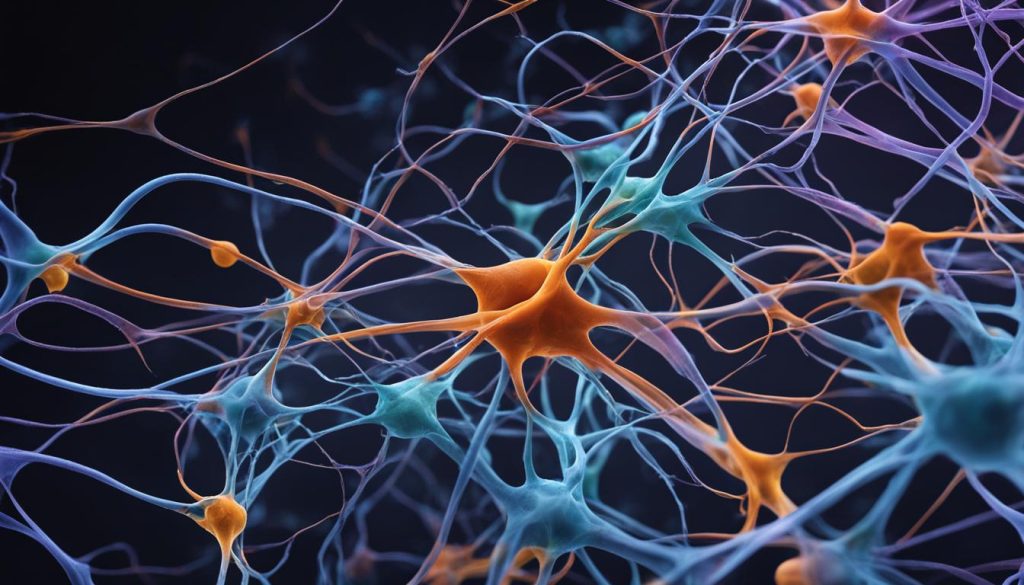
- It is instrumental in dampening down the heightened sensitivity of neurons implicated in generating seizure activity.
- Whilst providing substantial Neurontin benefits, such as the management of postherpetic neuralgia, it harbors a broader scope as an anticonvulsant, offering a reprieve from the relentless firing of neurons.
- Understanding Gabapentin’s influence on the central nervous system clarifies its crucial role as an anticonvulsant and underlines its neurochemical virtuosity.
Crucially, the effectiveness of Gabapentin is not limited to its impact on calcium channels. The larger implications for modulation of neurotransmitter release present a promising outlook on its future applications and potential benefits that could be unraveled with further research and clinical trials.
Gabapentin’s Role in Managing Mental Health Disorders
In my experience as a journalist exploring the multifaceted nature of psychiatric medications, Gabapentin’s off-label uses in mental health have drawn significant attention. Curiosity beckons as we delve into its influence on anxiety and mood disorders, as well as its potential to aid in the battle against substance dependency.
Effective Use of Gabapentin in Anxiety Disorders
For those struggling with anxiety, particularly social anxiety disorder and panic disorder, Gabapentin, known in the medical community as Neurontin, has surfaced as an adjunct therapy in some cases. While its application in generalized anxiety hasn’t been solidified through major randomized controlled trials (RCTs), specific studies in social phobia suggest that Gabapentin could reduce the intensity of anxiety symptoms. Particularly, I’ve learned that Gabapentin may provide some reprieve for patients with more severe panic symptoms, a detail that could shape its therapeutic profile as a potential third-line treatment.
Debunking Gabapentin Myths for Mood Disorders
Now, when it comes to mood disorders like Bipolar disorder and Major depressive disorder (MDD), the narrative surrounding Gabapentin becomes more nuanced. Despite anecdotal promises and smaller scale studies hinting at virtues in mood stabilization, there’s a dearth of corroborating evidence from larger RCTs. My journalistic inquiry into gabapentin’s effect on mood disorders illuminates the necessity for cautious optimism and precision in its recommendation as a mood disorder treatment.
Exploring Gabapentin’s Potential in Substance Use Disorders
Amidst the profoundly complex landscapes of Alcohol use disorder treatment and substance dependency recovery, Gabapentin has shined under the scientific spotlight, specifically in managing withdrawal symptoms. Definitive randomized controlled trials reinforce Gabapentin’s capacity to curb the severity of withdrawal, suggesting that it may play a valuable role in handling alcohol dependency with notable effectiveness in individuals experiencing intense withdrawal effects.
- Gabapentin and anxiety: Potential for reducing symptoms in social anxiety disorder and severe panic disorder.
- Social anxiety disorder: Gabapentin demonstrated a statistically significant symptom decrease in a 14-week RCT.
- Panic disorder: Post-hoc analysis of an RCT evidenced notable improvements in severe cases when treated with Gabapentin.
- Bipolar disorder and MDD: Lack of robust evidence from RCTs signals caution in prescribing Gabapentin for these conditions.
- Alcohol use disorder: Gabapentin has shown efficacy in increasing abstinence rates and reducing heavy drinking episodes.
- Gabapentin for withdrawal symptoms: Most effective in patients with severe alcohol withdrawal symptoms.
As I continue to document these findings, the narrative remains clear: while Gabapentin has established its place in certain areas of psychiatric care, it necessitates meticulous, evidence-driven consideration when prescribed for mood and substance use disorders.
Gabapentin Dosage: Finding the Right Amount
Embarking on the journey of Gabapentin therapy necessitates a nuanced approach to the dosing strategy. Introducing the medication into the body’s system stands at the gateway of effective treatment. Comprehensively understanding the principles behind Gabapentin dosage guidelines anchors both patients and healthcare providers in a landscape of therapeutic certainty, where the aim is to balance relief with safety.
Starting Low and Going Slow: Dosage Titration
The key to the successful integration of Gabapentin into a treatment regimen is the titration process. For someone like me, who’s intent on exploring every dimension of medical care, the concept of “starting low and going slow” aligns perfectly with the philosophy of mitigating risks while maximizing treatment efficacy. This dosing strategy is not just advisable; it’s imperative, allowing the body to adapt and respond as the dosage gradually ascends to therapeutic levels.
Optimizing Gabapentin Dosing for Seizure Control
In the realm of epilepsy treatment, dose escalation under a watchful eye is foundational. Gabapentin dosage for seizures is delicately calibrated, incrementing only as patient response and tolerability dictate. It is a process that underscores the customizability of Gabapentin – each patient’s journey with the medication is as unique as their neurological landscape.
Gabapentin Dosing for Postherpetic Neuralgia Relief
When addressing gabapentin for nerve pain, particularly in the torturous hold of Postherpetic neuralgia, the dosage narrative is woven with threads of patient symptomatology. The resulting fabric is a personal pain management dosage blueprint, carefully tailored to each individual seeking refuge from discomfort. My immersion into the science of this medication reveals a process rich in empathy and precision—a hallmark of effective medical care.
| Dosage Aspect | Consideration in Titration Process | Optimal Dosing Outcome |
|---|---|---|
| Initial Gabapentin Dose | Low starting dose, assess tolerability | Minimal side effects, establishment of therapeutic baseline |
| Epilepsy Treatment Dosing | Gradual increase based on seizure control and side effects | Effective seizure management with tolerable side effects |
| Postherpetic Neuralgia Dosing | Adjustment based on pain relief and patient response | Effective pain relief, improved quality of life |
The exploration of Gabapentin dosage is not just an exercise in clinical understanding—it’s a journey into the heart of patient-centric care.
Monitoring Gabapentin Side Effects and Interactions
My continuing exploration as a medical writer often leads me to scrutinize the complexities of drug-related adverse reactions. When it comes to Gabapentin, a medication predominantly utilized in the management of seizures and certain types of neuropathic pain, it’s crucial for me to highlight the array of Gabapentin side effects one might encounter. Drowsiness, dizziness, and visual disturbances stand as frequent mentions among those who’ve embarked on Gabapentin therapy. On top of that, individuals may experience issues with coordination, which merits a vigilant eye—the essence of thoughtful patient care.
But the landscape of potential complications is not entirely one-dimensional. The conversation becomes more intricate when we address drug interactions, a topic that I, as a medical storyteller, find significantly compelling. In this realm, Gabapentin plays a role that can’t be ignored – particularly its interaction potential with opioids, antihistamines, and sedatives, which can amplify its sedative properties to a concerning degree.
Understanding these dynamics is further complicated by the potential for respiratory depression, which raises the stakes when concurrently ingesting substances known for their respiratory effects. It is not just a matter of academic or scientific interest; it’s a real-world issue gripping the domains of public health and patient safety.
- Increased drowsiness or dizziness can increase risks when engaging in tasks requiring alertness.
- Visual disturbances may affect one’s ability to operate machinery or drive.
- Coordination problems could result in accidents or falls, particularly in the elderly.
The harmonious balance of medication benefit against its unwanted companions in the form of side effects or adverse reactions is a delicate dance. I see it as my role to ensure that patients and healthcare providers are tuned into the symphony of symptoms that could arise, shedding light on the darker corners of Gabapentin drug interactions. It’s about listening to the silent hums of caution, which, if ignored, could crescendo into louder echoes of distress.
| Side Effect | Potential Interaction | Clinical Action |
|---|---|---|
| Drowsiness | Opioids, Sedatives | Monitor closely, adjust dosage |
| Dizziness | Antihistamines | Evaluate necessity of concomitant use |
| Coordination Problems | Alcohol, Muscle Relaxants | Advise patients on activity limitations |
The implications of these adverse reactions and interactions are not merely fodder for scientific discourse. They weave through the very fabric of the patient experience, demanding a level of surveillance that aligns with the best practices of medical care. As one who communicates these complexities, my goal remains steadfast – to inform and guide those on their path through treatment with Gabapentin, ensuring that the journey is as safe as it is healing.
Best Practices for Gabapentin Administration
As someone committed to disseminating best practices in medication management, I often emphasize the importance of proper medication administration. When it comes to taking gabapentin, certain guidelines are paramount to ensure the treatment’s effectiveness and patient safety. Here, I’ll discuss the cornerstone principles of gabapentin administration that patients and healthcare providers should adhere to.
Gabapentin administration begins with adhering to the prescribed dosing schedule meticulously. It’s crucial to take gabapentin at evenly spaced intervals to maintain steady levels in your system. This consistency prevents the re-emergence of symptoms and minimizes the risk of potential withdrawal effects.
Another key aspect involves the physical handling of the medication. For those prescribed extended-release tablets, remember: do not cut, chew, or crush them. These formulations are designed to release the medication slowly over time, and tampering with the tablet can result in an unintended dose being released all at once. If you need to split a regular tablet, do so as directed by your physician, usually along a pre-scored line intended precisely for this purpose.
Food intake is another factor to consider when taking gabapentin. While immediate-release formulations can be taken with or without food, ensuring medication continuity, extended-release tablets should be taken with the evening meal to enhance absorption and effectiveness.
Gabapentin’s sedative effects warrant particular caution. It’s essential for patients to be acutely aware of how the drug affects them, especially when it comes to tasks requiring mental alertness, such as driving or operating heavy machinery. If you experience drowsiness or dizziness while taking gabapentin, engage with these activities only if it is safe to do so. The primary concern in medication administration is always patient safety, making the understanding and anticipation of such side effects paramount in gabapentin management.
Here’s a helpful table summarizing the main points to remember when taking gabapentin:
| Dosing Schedule | Tablet Handling | Food Consideration | Sedative Effects |
|---|---|---|---|
| Take at evenly spaced times; don’t miss doses. | Do not alter extended-release tablets; split regular tablets only if necessary. | Immediate-release can be taken with/without food; extended-release should be with the evening meal. | Be aware of drowsiness; avoid activities that require full alertness if affected. |
In conclusion, well-thought-out gabapentin administration is not just about following a schedule; it’s about understanding the interaction of the medication with your body and lifestyle. By valuing these aspects of medication management, individuals taking gabapentin can help ensure their treatment is as effective and safe as possible.
The Debate Around Gabapentin and Neuropathic Pain
In recent discussions within the medical community, the efficacy of Gabapentin in treating neuropathic pain has become a point of contention. As a medication that has demonstrated its effectiveness in managing conditions like postherpetic neuralgia, this controversy requires a deeper investigation into its application and outcomes in pain therapy.

Efficacy of Gabapentin in Postherpetic Neuralgia
Gabapentin, often acknowledged for its role in neuropathic pain treatment, particularly shines in its ability to alleviate the agonizing symptoms of postherpetic neuralgia, attaining credible validation in several randomized controlled trials. Such endorsements not only sustain its therapeutical applications but also bear witness to the tangible difference it makes for those haunted by this persistent pain.
Comparison with Other Treatments for Neuropathic Pain
When juxtaposed with other medications for neuropathic pain, Gabapentin’s distinct mode of interaction with calcium channels leads to noteworthy pain mitigation for many sufferers. The decision to elect Gabapentin over other medications demands an individualized approach, one that thoroughly weighs potential analgesic comparisons to identify the most favorable treatment route.
The Controversy of Off-Label Prescriptions for Pain Management
The journey of Gabapentin from a regulated treatment to a subject of controversial prescriptions strikes at the heart of the debate over its role in pain management. Off-label gabapentin use, while informed by clinical observations, often diverges from the guiding lights of evidence-based medicine, urging both caution and further scientific inquiry to navigate this contentious terrain.
| Aspect of Neuropathic Pain | Gabapentin Treatment Outcomes | Considerations in Pain Therapy |
|---|---|---|
| Postherpetic Neuralgia | Supported by randomized controlled trials for efficacy | Treatment focuses on changing pain perception |
| Analgesic Comparison | Often favorable for specific patient demographics | Requires careful case-by-case assessment |
| Off-label Use | Varied, sometimes based on anecdotal evidence | Necessitates cautious prescribing and more RCT evidence |
Neurontin Benefits Beyond Seizure and Pain Relief
In my role as a journalist, I’ve often highlighted Neurontin for nerve pain, discussing its FDA-approved usages and its efficacy in seizure control. Yet, my investigations have led me to uncover a range of additional benefits of Gabapentin that extend to different facets of health care, particularly within neurology and mental health. This expansion into various therapeutic uses underscores a trend of versatile medications finding their place in addressing complex health issues.
While Neurontin’s application for postherpetic neuralgia is well-documented and widely known, researchers and clinicians have turned their attention to its potential in treating restless legs syndrome (RLS). This condition causes discomfort and an irresistible urge to move one’s legs, particularly during periods of rest or inactivity.
Furthermore, my inquiry into mental health therapeutics uncovered that Neurontin might offer a glimmer of hope for certain mental health conditions. Although more exploratory than definitive, some research points to its potential in managing symptoms of anxiety and providing relief for individuals wrestling with alcohol use disorders.
Admittedly, the limitations of current research and the off-label nature of these applications cannot and should not be overlooked. For instance, rigorous studies are required to solidify Neurontin’s place in the treatment of RLS and elaborate on its function within the body when addressing different forms of pain and mental health disorders. As I continue to monitor advancements in pharmacological studies and clinical trials, these additional benefits of Gabapentin signify the evolving landscape of treatment possibilities.
- Exploration for Restless Legs Syndrome: Gabapentin offers an alternative for those suffering from RLS, changing the way the body senses discomfort.
- Potential Anxiety Relief: Neurontin is being examined as a possible treatment for anxiety, with some evidence suggesting benefits in this area.
- Addressing Alcohol Use Disorders: Emerging research suggests Neurontin may help in managing the challenging symptoms of alcohol withdrawal.
As a dedicated journalist in the medical field, my mission is to emphasize the importance of evidence-based practice and careful patient evaluation when considering the diverse therapeutic uses of Neurontin. The possibilities for this drug within both neurology and psychiatry are promising, but the application of Neurontin must always be backed by scientific rigor and a clear understanding of its efficacy and safety profile.
Conclusion
As we encapsulate Gabapentin’s role in medical practice, it stands prominently as both an anticonvulsant therapy and a psychiatric medication with a broadening scope. My examination of literature and current practices reveals a medication indispensable for certain FDA-approved indications and beneficial for some off-label uses. Yet, the complexities of patient response and concern for potential risks illuminate the need for a discerning approach to its prescription.
Reflection on Gabapentin’s Place in Current Medical Practice
In reflecting on Gabapentin’s integration into healthcare, I recognize its considerable impact as an anticonvulsant therapy that has carved out a significant niche. Its utility in managing seizures and postherpetic neuralgia paints a compelling portrait of its clinical value. However, the burgeoning prescription rate, underscored by its ranking as one of the top prescribed medications, highlights the dual realities of therapeutic benefits and the imperative for cautious, evidence-driven application in fields extending to mental health treatments.
Future Directions and Research on Gabapentin and Mental Health
Looking forward, the trajectory of Gabapentin research is poised for expansion, prompted by the demand for substantiated grounding in mental health treatments. It’s clear to me that future medical studies will be pivotal for uncovering nuanced applications and managing the fine balance between efficacy and safety. This future work will deepen our appreciation of Gabapentin’s pharmacological contributions and its possible innovations in psychiatric care.
Practical Takeaways for Healthcare Professionals and Patients
From a vantage point of healthcare advice on Gabapentin, the knowledge I’ve gleaned insists upon meticulous patient assessment and vigilant monitoring. Professionals must walk a tightrope, weighing potential benefits against the backdrop of potential adverse effects. For patients, the narrative consistently circles back to the importance of medication adherence, with an accent on being attuned to side effects and maintaining transparent dialogues with their healthcare providers. My role, as I view it, is to illuminate these aspects, guiding both patients and professionals towards informed decisions in the ever-evolving domain of Gabapentin use.
FAQ
What is Gabapentin and what are its primary approved uses?
Gabapentin is a medication known for its anticonvulsant properties, primarily approved by the FDA to treat postherpetic neuralgia and as an adjunct therapy in the management of partial seizures. It’s marketed under the brand name Neurontin.
Can Gabapentin be used for conditions other than its FDA-approved indications?
Yes, while it is mainly approved for treating seizures and postherpetic neuralgia, Gabapentin is frequently prescribed off-label for various other conditions, such as anxiety disorders, alcohol withdrawal, and other types of nerve pain.
Is there a concern surrounding the rise in Gabapentin prescriptions?
The rise in Gabapentin prescriptions has been notable and is a concern, especially as there’s evidence suggesting a significant portion of these prescriptions are for off-label uses. Increased usage highlights the need for careful consideration regarding the risks and benefits, particularly in individuals with a history of substance use disorders or those taking opioids.
How does Gabapentin work pharmacologically?
Gabapentin’s pharmacological action is believed to involve binding to the α2δ subunit of voltage-dependent calcium channels in the central nervous system, which in turn modulates calcium channel trafficking, reduces neuronal excitability, and alters neurotransmitter release, contributing to its anticonvulsant and analgesic properties.
What are the psychiatric uses of Gabapentin?
Psychiatric uses of Gabapentin include treating alcohol withdrawal and alcohol use disorder, with some evidence suggesting it may also be used as a third-line treatment for social anxiety disorder and severe panic disorder. Nevertheless, its routine use for generalized anxiety and other psychiatric conditions lacks robust evidence-based support.
What is the usual dosing strategy for Gabapentin?
The common approach for Gabapentin dosing is to start with a low dose and gradually increase it to achieve the desired therapeutic effect while monitoring for side effects. This method, known as titration, is essential for finding the right balance between efficacy and tolerability.
What are the potential side effects and drug interactions associated with Gabapentin?
Potential side effects of Gabapentin include dizziness, drowsiness, visual changes, and coordination issues. Drug interactions can occur when Gabapentin is taken with other central nervous system depressants like opioids, antihistamines, or sedatives, which can increase the risk of enhanced sedative effects and respiratory depression.
How should Gabapentin be administered?
Gabapentin should be taken exactly as prescribed by a healthcare provider. Extended-release tablets should not be cut, chewed, or crushed, and regular tablets may be split if advised. It’s important to consider factors like food intake and potential side effects when administering the medication.
How effective is Gabapentin in treating postherpetic neuralgia?
Gabapentin has been validated through randomized controlled trials as an effective treatment for postherpetic neuralgia. Its efficacy stems from its ability to alter the perception of pain, providing significant relief to those suffering from this type of neuropathic pain.
Why is off-label use of Gabapentin a debated topic?
Off-label use of Gabapentin is debated because it frequently occurs based on anecdotal evidence or observational studies rather than rigorous randomized controlled trials. Prescribing Gabapentin for unapproved indications can lead to overprescription and unintended consequences, emphasizing the need for cautious use and further research.
Does Gabapentin have other therapeutic uses beyond seizure and pain relief?
Yes, in addition to its main uses for seizure control and postherpetic neuralgia relief, Gabapentin is explored for other potential benefits such as treating restless legs syndrome. While its use in certain mental health conditions like anxiety and alcohol use disorders has shown promise, these applications require more substantive evidence.
What is the current perspective on Gabapentin in medical practice?
In current medical practice, Gabapentin plays a significant role in both FDA-approved and certain off-label uses. While it provides substantial benefits for various conditions, it must be used judiciously, taking into account the potential risks, patient selection, and ongoing research to optimize patient outcomes.


